SEO
SEO in 2026: What Actually Helps Your Website Get Found?
A practical look at the fundamentals that can improve your website's organic visibility.
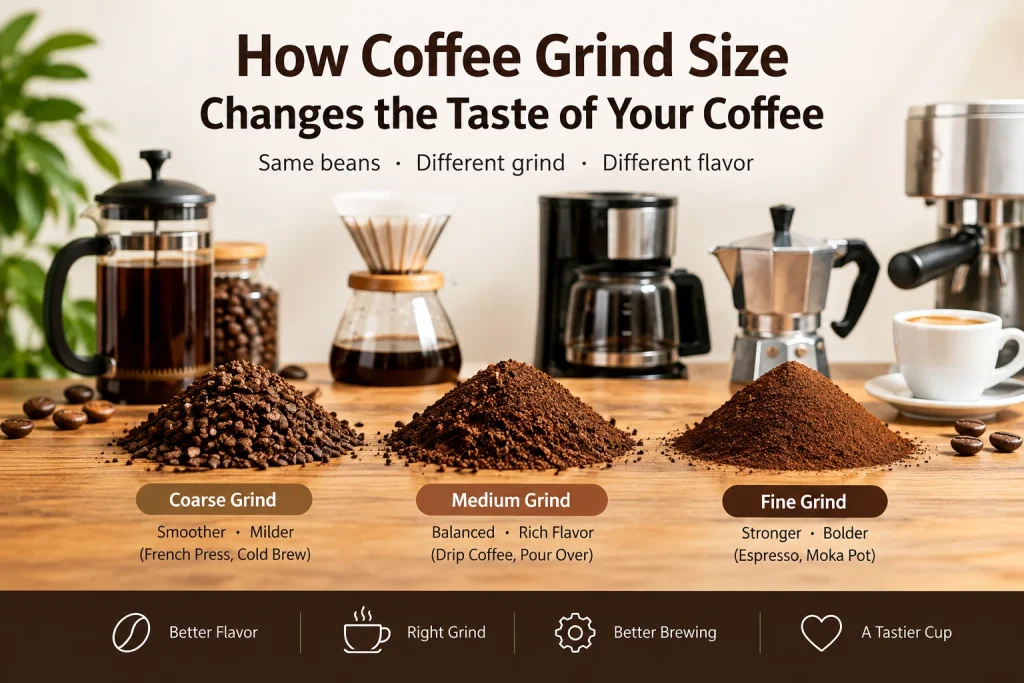
Coffee grind size has a big effect on the taste of your coffee. Even when you use high-quality beans, the wrong grind can make your cup taste weak, bitter, sour, or flat. The good news is that you can often improve your coffee simply by changing the grind.
The size of your coffee grounds controls how quickly water extracts flavor from the beans. Fine grounds expose more surface area to water, while coarse grounds slow the extraction process. As a result, choosing the right grind is an important part of making balanced coffee at home.
In this coffee grind size guide, you will learn how coarse, medium, and fine grounds affect flavor. You will also find a simple coffee grind size chart and the recommended grind for popular brewing methods.
Coffee grind size refers to how large or small your coffee particles are after grinding. The three basic levels are coarse, medium, and fine.
A coarse grind has large particles and is commonly used for longer brewing methods. Cold brew and French press are good examples.
Medium grounds have a texture similar to sand. They are often suitable for drip coffee makers and some other filter methods.
Fine grounds are much smaller and allow water to extract flavor quickly. Espresso is the most common brewing method that uses a fine grind.
The best coffee grind size depends on your brewing method, brewing time, and personal taste.
Understanding how grind size affects coffee taste can help you make better coffee without changing your beans.
When coffee grounds are too coarse, water can pass through them without extracting enough flavor. The result may taste weak, sour, or watery. This is often called under-extraction.
On the other hand, very fine grounds allow water to extract flavor more quickly. If the brewing process goes too far, your coffee may taste bitter, dry, or harsh. This can happen because of over-extraction.
A balanced grind allows water to extract the right amount of flavor. Your coffee should taste pleasant and well-rounded rather than extremely bitter or sour.
Keep in mind that grind size is not the only factor. Water temperature, brewing time, coffee-to-water ratio, and bean freshness can also change the final taste.
This simple coffee grind size guide can help you understand the difference between the main grind levels.
Coarse grounds have large particles. They are suitable for brewing methods that use longer contact times.
Best for:
Coarse coffee usually produces a smoother cup when the brewing time is long enough.
Medium grounds have a texture between coarse and fine. They are a useful starting point for many filter coffee methods.
Best for:
This grind can produce a balanced flavor when the brewing time and water flow are suitable.
Fine grounds have small particles and allow water to extract flavor quickly.
Best for:
Using a fine grind can create a strong and rich cup. However, grinding too fine may slow water flow and produce an overly bitter taste.
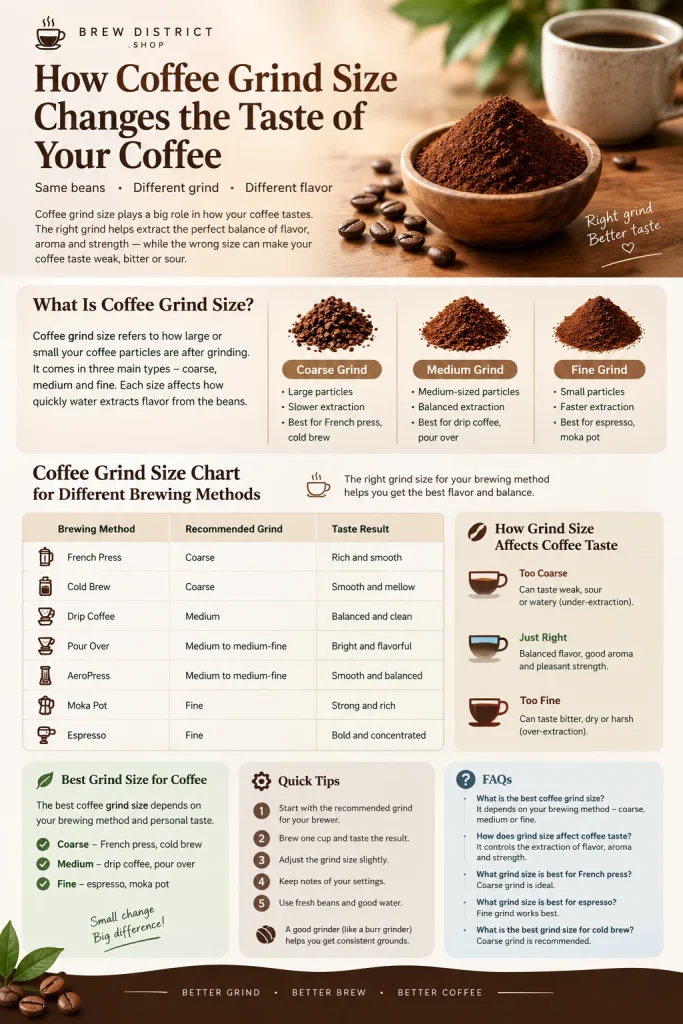
Use this coffee grind size chart as a starting point. You may need to make small adjustments based on your coffee beans and equipment.
| Brewing Method | Recommended Grind | Expected Taste |
|---|---|---|
| French Press | Coarse | Rich and smooth |
| Cold Brew | Coarse | Smooth and mellow |
| Drip Coffee | Medium | Balanced and clean |
| Pour Over | Medium to medium-fine | Bright and flavorful |
| AeroPress | Medium to medium-fine | Smooth and balanced |
| Moka Pot | Fine | Strong and rich |
| Espresso | Fine | Bold and concentrated |
The chart is a starting point rather than a strict rule. Different coffee beans, grinders, and brewing recipes can require different settings.
The best grind size for coffee depends mainly on the brewing method you use.
For French press, start with a coarse grind. The larger particles work well with the longer immersion time.
Cold brew also works well with coarse grounds. This can make filtering easier and help create a smooth drink.
Drip coffee generally works well with a medium grind. If the coffee tastes weak, you can try a slightly finer setting. If it tastes bitter, a slightly coarser setting may help.
Espresso requires a fine grind because the brewing process is short. A proper grind helps create balanced extraction and a concentrated flavor.
Therefore, there is no single best coffee grind size for every type of coffee. The right setting depends on your brewer and the result you want.
Knowing the coffee grind size for different brewing methods makes it easier to adjust your coffee.
Choose a coarse grind. A very fine grind can make the coffee difficult to filter and may create a muddy cup.
A coarse grind is a good starting point for cold brew. The long brewing time allows water to extract flavor gradually.
Start with a medium to medium-fine grind. You can adjust it based on how quickly water passes through the coffee.
A medium grind is commonly used for drip machines. It provides a good balance between water flow and extraction.
Use a fine grind for espresso. Because the brewing time is short, smaller particles help provide enough extraction.
A fine grind is often used for moka pot coffee. However, avoid grinding extremely fine because it can affect water flow.
Your coffee’s taste can tell you when a grind adjustment is needed.
Does your coffee taste sour or weak? The grounds may be too coarse, or the coffee may be under-extracted. Try a slightly finer grind.
Does your coffee taste bitter or harsh? The grounds may be too fine, or the coffee may be over-extracted. Try a slightly coarser grind.
Does the coffee taste balanced? Your current grind is probably close to the right setting.
Make small changes rather than changing the grind dramatically. This makes it easier to understand what improves the flavor.
A good grinder can make it easier to control your coffee. A burr grinder is especially useful because it can produce more consistent particles.
Start with the recommended setting for your brewing method. Then brew your coffee and taste the result.
If the cup tastes weak or sour, adjust slightly finer. When it tastes bitter or dry, try going slightly coarser.
Fresh beans also matter. Store coffee in an airtight container in a cool, dry place to help protect its flavor.
Most importantly, keep notes when experimenting. Recording your grind setting, coffee amount, water amount, and brewing time can help you find a recipe that works for you.
There is no single best setting for every coffee. Coarse is commonly used for French press and cold brew, medium for drip coffee, and fine for espresso.
How grind size affects coffee taste depends on extraction. A grind that is too coarse can produce weak or sour coffee, while one that is too fine can produce bitter or harsh coffee.
A coarse grind is a good starting point for French press. It works well with the longer immersion time and can make filtering easier.
Espresso generally requires a fine grind. The exact setting depends on the coffee beans, grinder, machine, and brewing recipe.
Coarse grounds are commonly recommended for cold brew. They work well with the long brewing process and are easier to filter.
Yes. Adjusting the grind can improve extraction and change the flavor of your coffee. However, also check your water, brewing time, coffee ratio, and bean freshness.
Coffee grind size is one of the easiest things to adjust when you want better-tasting coffee. Coarse, medium, and fine grounds each work better with different brewing methods.
Use this coffee grind size guide as a starting point, then make small changes based on taste. If your coffee is weak or sour, try a slightly finer grind. If it tastes bitter or harsh, try a slightly coarser setting.
With the right grind, fresh beans, good water, and a suitable brewing method, you can make a more balanced and enjoyable cup of coffee at home.